
If you’re looking at Moab-area real estate and thinking “this would crush on Airbnb,” the first job is not furnishing, pricing, or projected occupancy. The first job is confirming the property is legally allowed to be a short-term rental.
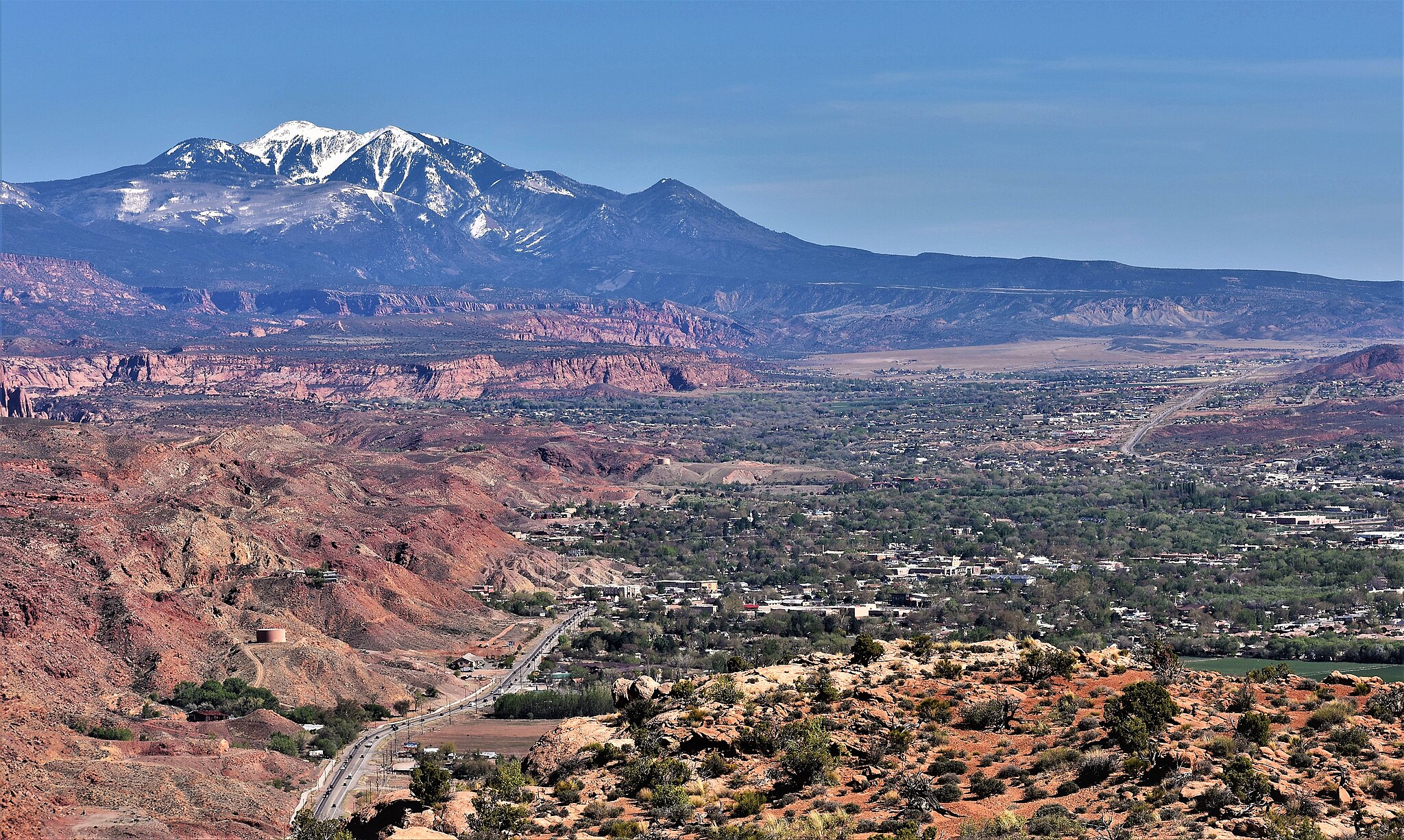
In the Moab region, that question changes block-by-block because three different jurisdictions touch what most people casually call “Moab”:
- City of Moab (Moab proper, inside city limits)
- Unincorporated Grand County (outside city limits, north/east/west of town depending on the area)
- Spanish Valley in San Juan County (south of Moab, Spanish Valley area)
This post is written for buyers and owners who want the practical version: what you can do, what you cannot do, and how to avoid the expensive mistake—buying a home for STR income only to learn you can’t legally operate.
A quick note before we dive in: codes and enforcement priorities change, and every parcel is fact-specific. Treat this as a framework and then confirm the details directly with planning/licensing staff (and in writing when it matters). You should verify zoning and licensing before buying or advertising.
The rule you should underwrite by
Here is the baseline rule I use when underwriting Moab-area STR deals:
- Do not operate an STR without permission. Advertising without the required licensing can trigger enforcement.
- Do not buy a property assuming you can “turn it into” an STR. In many parts of the Moab area, new STR use is either prohibited outright or allowed only in narrowly-defined zones/overlays.
Instead, the safe approach is:
- Identify the jurisdiction.
- Confirm the zoning and any overlay districts.
- Confirm whether STR/overnight accommodations are a permitted use for that parcel.
- Confirm the licensing requirements and transfer/renewal rules.
- Get confirmation in writing when the STR status is material to the purchase.
With that, let’s go jurisdiction by jurisdiction to review Moab STR regulations.
Part 1: City of Moab (Moab proper) — heavily restricted and license-driven
Inside Moab city limits, the city treats “nightly rentals” as a regulated land use with a specific licensing regime and zoning constraints. The bottom line? In Moab, the days of ‘buy first, permit later’ are over. Unless the property is already fully licensed and zoned for short-term stays, it’s effectively off-limits for Airbnb.
A) The zoning reality: many zones prohibit residential short-term rentals
Moab adopted an ordinance clarifying that short-term rentals of dwellings are prohibited in a long list of zones (and in any other zones where STRs are not listed as a permitted use), with limited exceptions for certain regulated lodging types.
That same ordinance defines “short term rental” around the 30 consecutive day threshold (less than or equal to 30 days) and treats it as a form of transient lodging use.
Practical consequence: in many “normal” residential situations, your options are:
- Buy a property that already has legal STR entitlement and can keep it; or
- Buy for long-term rental / personal use and skip STR entirely; or
- Buy in the small set of areas/projects designed and approved for overnight accommodations.
B) Licensing is not optional (and it’s tied to the owner and the property)
Moab’s licensing chapter requires a nightly rental business license to operate nightly rental activity in the city.
Important operational details from the city licensing chapter:
- No operating without a license.
- Owner-based licensing: the license is in the property owner’s name (even if an agent applies).
- Separate licensing by property/location: Moab’s rules contemplate separate fees per location, and they restrict how property managers can bundle locations.
- Transfer event: upon sale/transfer, the new owner must apply for a new nightly rental license within a short window if they intend to operate a nightly rental.
That last point matters for buyers: even if a property is currently operating, you want to understand whether the use is tied to zoning/entitlement vs. a license that must be re-issued.
C) Inspections, operating standards, and enforcement have real teeth
Moab’s licensing rules also bake in compliance mechanics:
- Inspections by building/fire/health prior to issuance (and as needed for enforcement).
- A stated maximum stay concept (no more than 30 consecutive days).
- Requirements to collect/remit applicable taxes are explicitly called out.
- Penalties can escalate: operating without the required business license is treated as a criminal offense in the code section (a Class A misdemeanor framework) and can also be pursued civilly.
What I tell buyers looking inside Moab city limits
If you are shopping inside city limits, you want to structure your diligence like an entitlement review, not like a comps review. A good “STR-permission checklist” looks like:
- Confirm the property is inside Moab city limits (not “Moab-ish” marketing language).
- Pull the zoning district.
- Confirm whether nightly rental/overnight accommodations are permitted in that zone (and whether the current use is legal nonconforming, conditional, etc.).
- Ask the city what license is required, whether it can be issued to a new owner, and what the transfer process looks like.
- Make the purchase contract contingent on written confirmation if STR income is part of the price you’re paying.
Part 2: Unincorporated Grand County — overlays, master plans, and “overnight accommodations” tools
Outside Moab city limits, the conversation usually shifts away from “a citywide STR licensing regime” and toward the county land use system—especially overlay districts that control where overnight accommodations are allowed.
In unincorporated Grand County, nightly rentals are often controlled through zoning districts and Overnight Accommodations Overlay (OAO) tools, and many parcels won’t allow new overnight accommodations unless a specific overlay or entitlement applies.
A) The OAO concept: overnight accommodations are not appropriate everywhere
Grand County’s land use code language (as reflected in an ordinance amending the county code) explains the purpose of OAO districts in unusually candid terms: overnight accommodations are part of the economy, but not appropriate in all areas, and the overlay is intended to designate subdivisions/developments where they are permitted.
It also spells out what the county is trying to manage—traffic, housing impacts, services, and other infrastructure burdens associated with lodging use.
B) “Residential units used for overnight accommodations” is explicitly a regulated category
In the same county ordinance material, “Residential Units Used for Overnight Accommodations” is pointed directly to the OAO section, which is a signal that the county expects this use to be routed through an overlay/entitlement structure rather than treated as a default right everywhere.
C) Your practical risk in unincorporated Grand County
The most common buyer mistake in the county is assuming: “It’s outside the city, therefore STR is easier.”
Sometimes it is easier. Sometimes it is not allowed at all for that parcel. The boundary line isn’t the deciding factor—the zoning + overlays + recorded development approvals are.
Moab Premier’s “mental model” framing is useful: existing licensed projects and purpose-built communities tend to be the “green-ish” inventory, while standard neighborhoods are often “yellow/red” unless there’s a specific entitlement already in place.
How to diligence Grand County property like a professional
Instead of asking “is it in Grand County,” ask these:
- Does the parcel have an Overnight Accommodations Overlay or other recorded approval that allows nightly rental activity?
- Are there overlays that prohibit overnight accommodations (Moab Premier flags examples like prohibitory overlays that staff can identify quickly)?
- Is the property in a purpose-built project with recorded STR rights (condos/townhome communities where it was designed that way from inception)?
- Are there HOA/CC&R restrictions that independently ban STR even if the county zoning would allow it? (This one isn’t “government regulation,” but it kills deals just as effectively.)
Part 3: Spanish Valley in San Juan County — the SVR prohibition and the “grandfathered” reality buyers need to understand
Spanish Valley is where I see the biggest gap between “what people assume” and “what the rules actually say,” because it looks and feels like the Moab market while sitting under a different county’s ordinance framework.
A) The current ordinance language is blunt: SVR district does not allow short-term rentals
The ordinance doesn’t merely say “STR is limited.” It states (in the inserted language) that:
- “No short-term rental is allowed in the SVR District,” and
- the Spanish Valley Overnight Accommodations Overlay “shall not be applied” to SVR, and
- a broad list of nightly-rental-style lodging types are not permitted in SVR (hotel/motel variants, tourist court, commercial condo for STR, B&B, boarding/lodging house, resort, campground, and variations intended for nightly rental).
It also defines “short-term rental” around the “fewer than 30 consecutive days” threshold.
B) So what about existing STRs and “grandfathering”?
This is where Spanish Valley gets complicated in practice.
San Juan County has had real disputes about whether the earlier Spanish Valley development ordinances allowed STRs, whether certain licenses were “issued in error,” and what rights (if any) owners gained by operating under prior county actions. The Utah Office of the Property Rights Ombudsman issued an advisory opinion in that context, describing the background, the county’s position, and the owner arguments.
What buyers should take from that history:
- “Grandfathered” is not a vibe. It is a legal status that depends on facts: what was allowed when, what approvals existed, whether the use was lawful when established, and whether the use was continuous.
- Because the stakes are high, written confirmation becomes part of smart diligence.
You mentioned a best-practice that I strongly agree with: if the deal relies on continuing STR operations, get something concrete as part of closing (for example, a written position from the county attorney underwriting the use). That’s the right instinct in a jurisdiction where the ordinance language is explicit and enforcement risk is real.
C) The plain-English investor takeaway for Spanish Valley (San Juan County)
If a property is in the SVR district, do not assume you can start a new STR. The ordinance language is designed to foreclose that.
If you are buying a property that is already operating as an STR, treat the STR status as an asset that must be verified and protected:
- confirm zoning district (SVR vs. commercial district),
- confirm any business licensing history,
- confirm continuity of operations,
- and get written confirmation during diligence if possible.
A due diligence structure you can use in your next Moab-area deal
When STR income is part of your purchase price, your diligence should be built around permissions, not photos.
Here’s a clean structure that works across all three jurisdictions:
- Step 1: Jurisdiction check
- City of Moab vs. unincorporated Grand County vs. San Juan County (Spanish Valley)
- Step 2: Zoning + overlay check
- Identify the zone and any overlays (especially OAO concepts in Grand County; SVR in Spanish Valley)
- Step 3: STR permission check
- Is STR/overnight accommodations a permitted use, a conditional use, or prohibited?
- If “grandfathered,” what is the factual basis?
- Step 4: Licensing check
- What license is required?
- Is it renewable annually?
- What happens on transfer of ownership? (Moab’s code explicitly requires a new owner to apply after transfer if they intend to operate.)
- Step 5: Operational compliance check
- Inspections, occupancy limits, local representative requirements, tax compliance, posting/license display, etc.
- Step 6: Paper it
- Put it in the contract: contingencies, seller representations, and (when needed) written confirmation from the jurisdiction.
Bottom line
Moab is an extraordinary STR market, but it is not a “list it and see what happens” market—especially inside Moab city limits and in Spanish Valley’s SVR district. The cheapest way to win here is to be boring about entitlement: confirm zoning, overlays, and licensing before you buy, and get the important points in writing when the STR income is part of the deal’s value.